
Ask your neurologist if a DaTscan is truly needed before agreeing to schedule one — it is only useful when the diagnosis is genuinely uncertain.
⚡ Quick Answer
A DaTscan confirms dopamine transporter deficiency, a hallmark of Parkinsonian syndromes. It is used exclusively when a clinical exam cannot clearly distinguish Parkinson’s from Essential Tremor and does not measure disease progression. The first step is always a thorough neurological evaluation by a Movement Disorders Specialist.
In This Article
- What a DaTscan Actually Shows (and Doesn’t Show)
- When is a DaTscan Medically Necessary?
- Why a Levodopa Trial is Often a Better First Step
- DaTscan vs. Levodopa Trial: A Head-to-Head Comparison
- What Medications Can Interfere With DaTscan Results?
The Scan You Might Not Need
Waiting for a definitive Parkinson’s diagnosis can be agonizing. It’s tempting to believe a high-tech brain scan can provide a simple yes-or-no answer, but the reality is more complex. Parkinson’s disease is a clinical diagnosis, meaning it’s based on a neurologist’s examination of your symptoms and medical history. A DaTscan is not a ‘Parkinson’s test.’ It’s a specific tool used only to solve a very particular diagnostic puzzle: telling the difference between tremors caused by dopamine loss (parkinsonism) and other conditions like Essential Tremor. Understanding its limited role can save you time, money, and unnecessary anxiety. Our goal at Parkinsons.Community is to provide information that helps you navigate these complex diagnostic conversations.
A COMMON DIAGNOSTIC CHALLENGE
25%
Up to 25% of initial Parkinson’s diagnoses made by non-specialists are later found to be incorrect, often confused with conditions like Essential Tremor. (Source: Movement Disorder Society, Current Guidelines)
For six months, Sarah fought her husband’s insurance company for a DaTscan. The anxiety of not having a ‘conclusive’ test was consuming them. After countless appeals, they finally got the scan, which resulted in a significant out-of-pocket cost, as fees can be thousands of dollars depending on insurance coverage out-of-pocket. The result? It confirmed what the Movement Disorders Specialist had suspected all along based on his clinical exam and positive response to levodopa. The scan didn’t change the treatment plan one bit, but the financial stress and diagnostic delay cost them dearly.
3 Clinical Strategies
Reviewed against current clinical practice standards.
What a DaTscan Actually Shows (and Doesn’t Show)
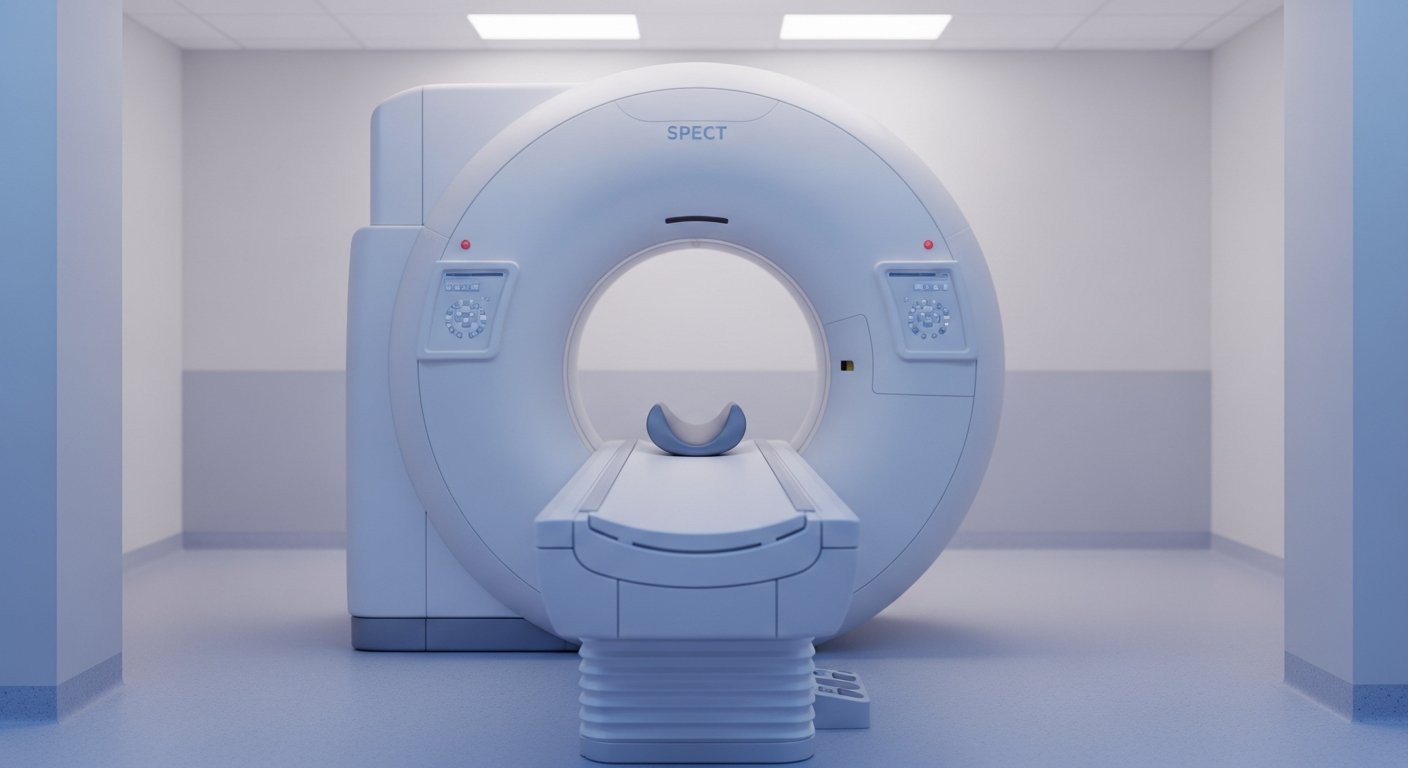
- A DaTscan uses an injected radiopharmaceutical agent (Ioflupane I-123) to visualize the density of dopamine transporters (DaT) in the brain’s striatum. A reduced signal suggests a loss of dopamine-producing neurons. [3]
- It cannot distinguish between different forms of parkinsonism, such as Parkinson’s disease, Multiple System Atrophy (MSA), or Progressive Supranuclear Palsy (PSP). It only indicates a general dopamine deficit. (Source: NINDS, Current Guidelines)
- Crucially, a DaTscan cannot measure disease severity or track its progression over time. A scan taken today will not look different from one taken two years from now, even if symptoms have worsened. [1]
💡 What You Can Do Today: Review your neurologist’s clinical notes in your online patient portal. Search for the terms ‘diagnostic uncertainty’ or ‘differential diagnosis includes Essential Tremor.’ If these phrases are absent, a DaTscan is likely not being considered.
When is a DaTscan Medically Necessary?
- The primary, insurance-approved use for a DaTscan is to differentiate parkinsonian syndromes from Essential Tremor when a clinical exam is ambiguous. (Source: CMS, Current Guidelines)
- The gold standard for diagnosing Parkinson’s remains a comprehensive neurological exam combined with assessing the patient’s response to levodopa. Routine imaging is not recommended for classic cases. [2]
- A scan may be considered if a patient has tremor but lacks other cardinal signs of Parkinson’s (like rigidity or bradykinesia), or if their response to levodopa is unclear. (Source: American Academy of Neurology, Current Guidelines)
💡 What You Can Do Today: For one week, keep a simple ‘tremor log.’ Note the time of day and the activity (e.g., ‘drinking coffee,’ ‘writing a check,’ ‘at rest watching TV’) when your tremor is most and least noticeable. This provides concrete data for your doctor’s clinical evaluation.
Why a Levodopa Trial is Often a Better First Step
- A positive and sustained response to carbidopa-levodopa is one of the strongest indicators of Parkinson’s disease. This approach is both diagnostic and therapeutic, offering potential symptom relief. (Source: Parkinson’s Foundation, Current Guidelines)
- Unlike a DaTscan, which only provides a single piece of data, a levodopa trial gives the clinical team information about how a patient might respond to the cornerstone of Parkinson’s therapy. Discuss the risks and benefits of a trial with your neurologist.
- A DaTscan only confirms a dopamine problem; it does not confirm Parkinson’s specifically. A levodopa trial, while not perfect, provides more clinically useful information for creating a treatment plan. [1]
💡 What You Can Do Today: Write down this specific question for your next appointment: ‘Before we consider imaging, could you explain the pros and cons of a short-term, low-dose carbidopa-levodopa trial to help clarify the diagnosis?’
Is your neurologist uncertain whether you have Parkinson’s or Essential Tremor?
You don’t have to navigate this diagnostic limbo alone.
DaTscan vs. Levodopa Trial: Which Approach Is Right for You?
The ‘Red Herring’ Medications That Can Invalidate DaTscan Results
A DaTscan’s accuracy depends on a clean slate. Several common prescription medications can bind to dopamine transporters and interfere with the scan’s imaging agent, potentially leading to a false-positive or inconclusive result. According to the Society of Nuclear Medicine, this list includes certain stimulants used for ADHD (like methylphenidate), some antidepressants (like bupropion or sertraline), and certain appetite suppressants. It is absolutely critical to provide your neurologist and the imaging center with a complete list of all medications, including over-the-counter drugs and supplements. Your physician may advise you to temporarily pause a medication before the scan, a decision that must be carefully managed by your prescribing doctor.
A DaTscan result is only as good as the preparation. A missed medication on your history form can lead to a completely invalid scan.
What a DaTscan CANNOT Tell You About the Future
Many families hope a DaTscan will provide a roadmap, but its purpose is much narrower. The scan is a snapshot of dopamine transporter levels on a single day. According to the Michael J. Fox Foundation, it does not measure the rate of disease progression, predict which symptoms will appear next, or guide medication dosing. A ‘positive’ scan simply places you in the broad category of ‘parkinsonism.’ It doesn’t tell your doctor if you have Parkinson’s disease versus a more aggressive atypical parkinsonian syndrome. This is why the clinical exam and response to therapy, as recommended by the American Academy of Neurology, remain the cornerstones of diagnosis and management. The focus should always be on treating the symptoms you have today.
If Levodopa stops the tremor, you have your answer. Stop fighting insurance for a DaTscan—it will not change the treatment plan. It is only required if the diagnosis is deeply uncertain.
✅ Your Next Steps
Use this checklist to start today.
- ✅ Add to Your Doctor Prep PDF: Discuss if diagnostic ambiguity warrants a DaTscan or if a Levodopa trial is sufficient to guide the treatment plan.
- ✅ Verify Insurance Pre-authorization: Call your insurance provider to ask about coverage criteria and out-of-pocket costs for SPECT scans (CPT code 78607). (laws and coverage vary by state and individual plan — consult a licensed professional or SHIP counselor).
- ✅ Compile a Complete Medication List: Create an exhaustive list of all prescription drugs, over-the-counter medications, vitamins, and supplements to share with your neurologist and the imaging facility.
- ✅ Document Your Symptoms: Keep a detailed journal of your motor symptoms, noting what makes them better or worse. This clinical data is more valuable than any scan for long-term management.
- ✅ Join the Community: Attend a free Parkinsons.Community peer support session to speak with others who have navigated the diagnostic process.
Clinical References
- Constantinides VC, Souvatzoglou M, et al. Dopamine transporter SPECT imaging in Parkinson's disease and atypical Parkinsonism: a study of 137 patients. Neurol Sci. 2023;44(5):1613-1623. PMID: 36658411.
- Akdemir ÜÖ, Bora Tokçaer A, et al. Dopamine transporter SPECT imaging in Parkinson’s disease and parkinsonian disorders. Turk J Med Sci. 2021;51(2):400-410. PMID: 33237660.
- Oh M, Lee N, et al. Diagnostic accuracy of dual-phase (18)F-FP-CIT PET imaging for detection and differential diagnosis of Parkinsonism. Sci Rep. 2021;11(1):14992. PMID: 34294739.
⚠️ Medical & Legal Disclaimer: This article is for educational purposes only and does not constitute medical advice. Consult a Movement Disorders Specialist for evaluation of DaTscan diagnostic imaging. Parkinsons.Community provides educational navigation support only and does not perform clinical triage.
📞 When to Call 911: If you or your loved one experiences a medical emergency — difficulty breathing, loss of consciousness, a fall with injury, chest pain, or sudden severe confusion — call 911 immediately. The information on this page is educational and does not replace emergency medical services.
FREE MEMBER BENEFIT
Navigate the Diagnostic Process With Confidence
The uncertainty of a diagnosis is stressful. Peer support can provide the emotional grounding and practical insights you need to ask the right questions and partner with your doctor effectively.
Educational support only. Never medical triage.